



How much protein do you really need – and how to fit it into your day
Protein is the nutrient most people fall short on – not because they don't know about it, but because they can't fit it into their day. Here's how much you really need and how to get it without stress.
When I look at the diet of new coaching clients, I almost always see the same picture: not enough protein.
Not just a little too little, but often only half of what the body actually needs when you’re losing weight or building muscle.
And here’s the interesting part: most people even know that protein matters. It’s not a lack of knowledge – it’s getting it onto the plate every single day.
Why protein matters so much
Protein is the building material for your muscles. When you lose weight, enough protein helps make sure you mainly lose fat and not muscle. When you want to build muscle, it’s the foundation that makes your training pay off in the first place.
There’s one more point many people underestimate: protein keeps you full. A meal with a decent amount of protein usually keeps you going much longer than a plate of pasta with sauce. When you’re trying to lose weight, that’s worth its weight in gold.
How much protein do you really need?
My guidelines are simple:
- Losing weight or building muscle: 1.8 to 2.2 g of protein per kilo of body weight per day.
- Maintaining your weight: 1.6 to 2.0 g per kilo.
- 50 and over: your lower limit is 0.2 g higher.
An example: you weigh 70 kg and want to lose weight. That puts you at roughly 125 to 155 g of protein a day.
If you’re clearly overweight, don’t calculate with your current weight but with a realistic reference weight. Otherwise you end up with numbers hardly anyone can manage in everyday life. That’s exactly what my calorie calculator (currently in German) does for you: next to your calories, it shows your protein target too.
My trick: spread it over 3 to 4 meals
125 g of protein sounds like a lot. And in one go, it’s hard to manage.
That’s why I don’t think in daily totals but in meals. If you eat 3 to 4 meals a day and get 25 to 40 g of protein into each one, you automatically land in the right range.
That’s much easier than realising in the evening that you’re still 70 g short.
No scale needed: use your hand
Don’t want to weigh everything? You don’t have to.
Per meal, one portion of protein the size of your palm: a piece of chicken, fish or lean meat, a serving of low-fat quark or a few eggs. Men take two palms.
Add a fist of carbs, two fists of vegetables and a thumb of fat. That gives you a plate that fills you up and fits your goals.
Simple protein sources for everyday life
I like to keep things simple. These are foods I almost always have at home:
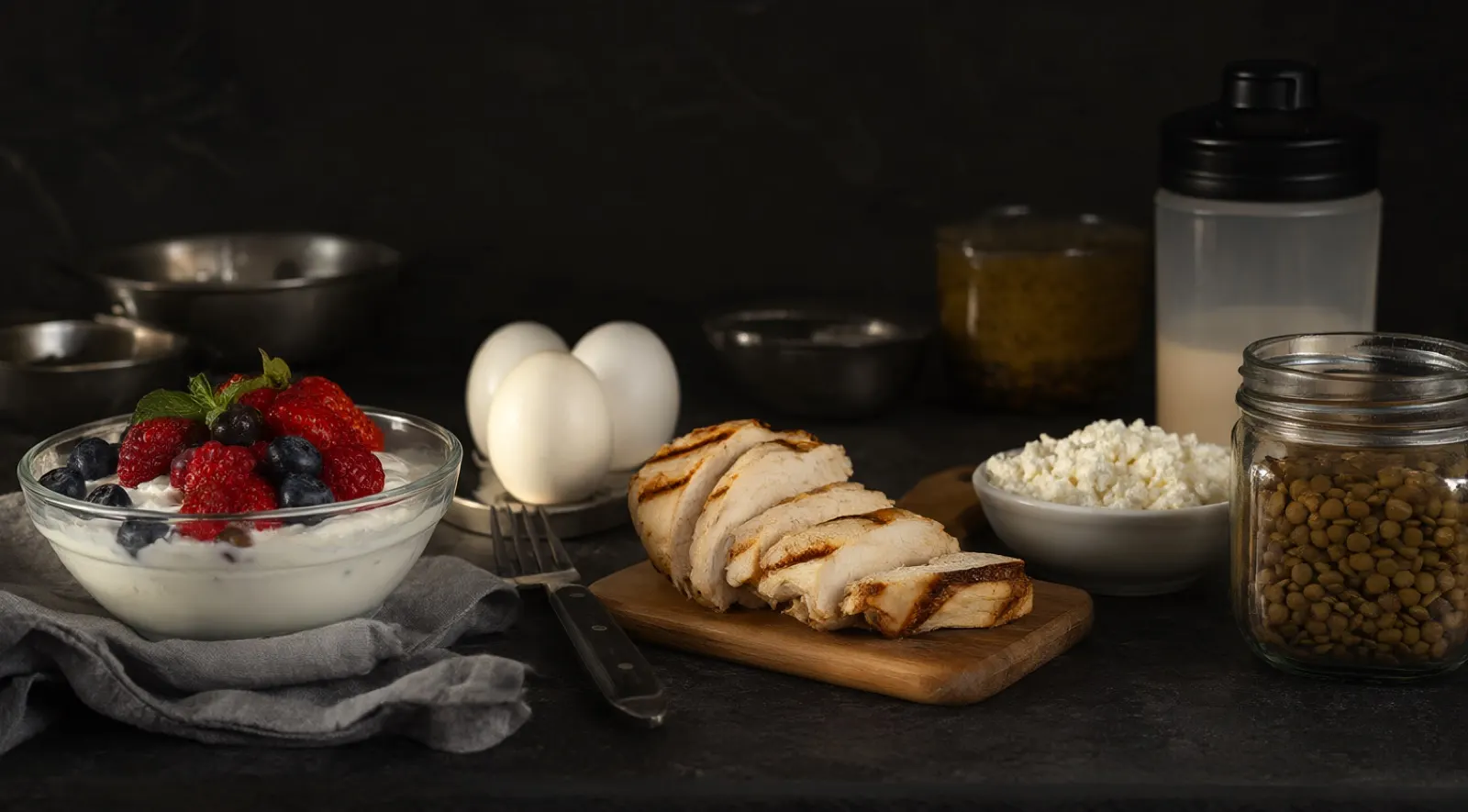
- Breakfast: low-fat quark or skyr with berries, eggs, cottage cheese.
- Lunch and dinner: chicken, turkey, lean beef, fish, prawns.
- Plant-based: lentils, chickpeas, tofu, tempeh, edamame.
- On the go: cottage cheese, boiled eggs, skyr.
What matters isn’t eating the same thing every day, but having one of these sources in every meal.
The most common mistakes
- Breakfast without protein: a bread roll with jam does very little. This is where most people miss their first chance of the day.
- Pushing everything to the evening: if you barely eat protein during the day, you’ll be hungry at night and still won’t reach your target.
- Perfection instead of consistency: if you only get 100 g instead of 125 g one day, that’s no drama. What counts is staying on track on average across the week.
My conclusion
You don’t have to be a bodybuilder to benefit from enough protein. Whether you want to lose weight, build muscle or simply get fitter: protein is the lever that almost always gets neglected.
Start small. Add a protein source to every meal and after two weeks, see how your hunger and your training change.
Related: Meal prep made easy – save time and stay on track · Why you’re not getting the results you want despite training